
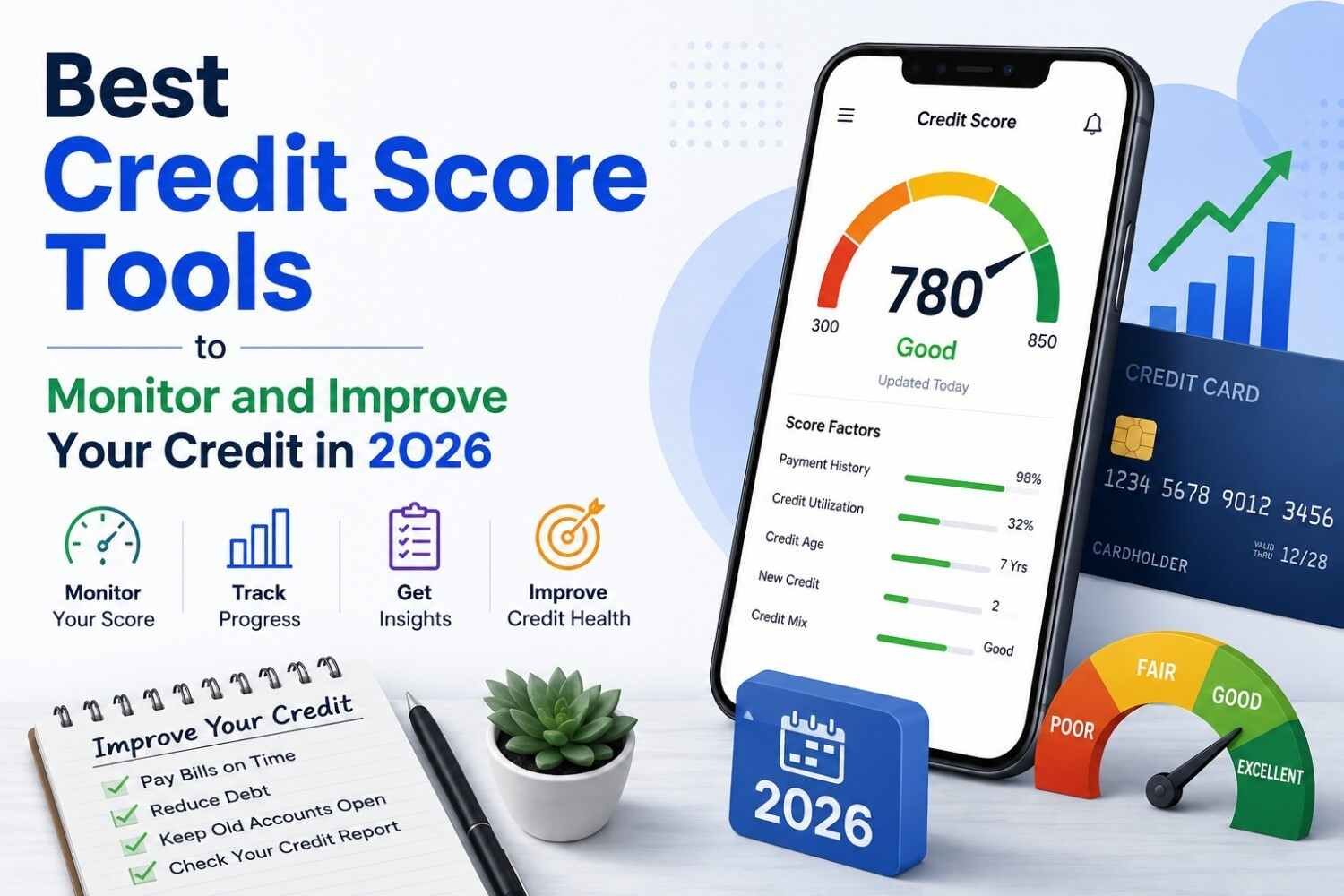
Your credit score can influence important financial decisions, from getting approved for a credit card to qualifying for a mortgage or receiving competitive loan terms. The good news is that you don't need to constantly check multiple financial websites to understand your credit profile.
Modern credit score tools and credit monitoring services make it easier to track changes, review your credit report, identify potential problems, and understand which financial habits may help strengthen your credit over time.
In this guide, we'll look at the key features to consider when choosing a credit monitoring tool, how credit reports work, and which types of financial tools can be useful for managing your overall credit profile.
What Is a Credit Score?
A credit score is a numerical representation of information in your credit history. Lenders and other financial institutions may use credit scores as one factor when evaluating applications for credit.
Several factors can influence a credit score, including:
- Payment history
- Credit utilization
- Length of credit history
- Types of credit accounts
- Recent credit applications
Because different scoring models can use different calculations, the score you see in one financial app may not always be identical to a score used by a particular lender. That's why credit score monitoring is most useful when you focus on overall trends rather than a single number.
Why Use a Credit Monitoring Tool?
A good credit monitoring service can make it easier to stay aware of changes to your credit profile. Depending on the provider, features may include:
Credit Score Tracking
Some services provide regular access to a credit score so you can monitor whether your score is changing over time.
Credit Report Monitoring
A credit monitoring tool may alert you when certain information on your credit report changes. This can help you notice unfamiliar accounts, inquiries, or other changes that deserve further investigation.
Identity Theft Alerts
Some paid financial protection services combine credit monitoring with identity theft monitoring and alerts. These services can be particularly useful for people who want an additional layer of awareness around their personal financial information.
Financial Insights
Some modern finance platforms provide personalized information about factors that may be affecting your credit profile, such as credit utilization or payment history.
Best Features to Look for in Credit Score Tools
Not every credit monitoring service offers the same features. Before choosing one, consider the following:
1. Credit Score Access
Check whether the service provides regular access to your credit score and clearly explains which scoring model or data source is being used. A score is more useful when you understand what it represents.
2. Credit Report Access
A strong credit report monitoring solution should make it easy to review important information associated with your credit profile. Look for tools that make changes easy to understand rather than simply displaying large amounts of financial data.
3. Credit Monitoring Alerts
Real-time or frequent alerts can help you notice potentially important changes sooner. For example, an alert could notify you about a new account, a new credit inquiry, changes to account information, or potentially suspicious activity.
4. Identity Protection Features
Some premium identity theft protection services offer features beyond traditional credit monitoring. Depending on the provider, these can include identity monitoring, account alerts, fraud assistance, and other protection services. If identity protection is important to you, compare exactly what each service includes before paying for a subscription.
5. Educational Financial Tools
Some platforms include calculators, educational resources, personalized recommendations, and budgeting features. Having these tools in one place can make it easier to understand your overall financial situation.
Free vs. Paid Credit Monitoring Services
One of the biggest decisions is whether to use a free credit monitoring service or pay for a premium plan.
Free Credit Monitoring
Free services can be useful for basic credit awareness. They may provide credit score access, basic credit monitoring, credit report information, financial education, and basic alerts. For someone who simply wants to keep an eye on their credit profile, a free option may be enough.
Paid Credit Monitoring
Premium credit monitoring services can provide additional features. Depending on the provider, these may include more comprehensive identity monitoring, additional credit bureau monitoring, identity theft protection, fraud assistance, advanced financial alerts, and additional financial planning tools.
Before subscribing, compare the monthly or annual cost with the features you actually need.
Can Credit Monitoring Improve Your Credit Score?
This is an important distinction. Credit monitoring itself does not directly increase your credit score. Instead, monitoring can help you become aware of information that may affect your credit.
For example, regularly reviewing your credit profile may help you notice missed payments, high credit utilization, incorrect information, accounts you don't recognize, or recent credit inquiries.
Once you identify an issue, you can take appropriate steps to address it. For example, paying bills on time and managing credit utilization responsibly can be important parts of maintaining a healthy credit profile.
How to Choose the Right Credit Score Tool
The best tool depends on what you're trying to accomplish.
For Basic Credit Tracking
Look for a service offering straightforward credit score monitoring and alerts.
For Credit Report Monitoring
Prioritize services that make it easy to review changes to your credit report.
For Identity Protection
Consider a service that combines credit monitoring with broader identity theft protection.
For Financial Planning
A platform that combines credit monitoring, budgeting, savings tools, and financial calculators may be more useful if you want to manage your finances in one place.
Credit Score Tools vs. Credit Monitoring Services
Although these terms are often used interchangeably, they can refer to slightly different products.
A credit score tool may primarily show your score and provide educational information about it. A credit monitoring service generally focuses more on tracking changes and sending alerts.
Some financial platforms combine both features with credit reports, budgeting, expense tracking, financial calculators, identity monitoring, and personal finance management. When comparing services, look beyond the product name and check the actual features included in the plan.
How Often Should You Check Your Credit?
There's no universal requirement to check your credit every day. For many consumers, periodic monitoring is enough to maintain awareness of their financial profile.
However, you may want to monitor more closely when you're applying for a mortgage, shopping for a major loan, applying for new credit, recovering from identity theft, or preparing for a major financial decision.
Regular monitoring can help you understand what's happening with your credit before you apply for important financial products.
What to Do If You Find an Error on Your Credit Report
If you notice information that appears inaccurate or unfamiliar, don't automatically assume it is fraud. First, review the information carefully and determine what appears incorrect.
Depending on the situation, you may need to contact the relevant credit reporting organization or financial institution to investigate the information. If you believe you've experienced identity theft or fraudulent activity, consider taking appropriate identity protection and fraud-response steps promptly.
Frequently Asked Questions
What is the best credit score monitoring tool?
The best credit monitoring tool depends on your needs. Some people only need basic score tracking, while others may want credit report monitoring, identity protection, fraud alerts, and additional financial tools.
Does checking your own credit score hurt your credit?
Generally, checking your own credit information is considered a soft inquiry and does not have the same effect as applying for new credit. However, always distinguish between checking your own information and submitting a credit application.
Can credit monitoring prevent identity theft?
Credit monitoring cannot guarantee that identity theft will be prevented. However, monitoring and alerts can help you become aware of certain suspicious changes sooner.
Are free credit monitoring services worth using?
Yes, free tools can be useful for basic credit awareness. However, premium services may offer additional monitoring and identity protection features that some consumers may find valuable.
How can I improve my credit score?
Responsible financial habits can help over time. Important factors can include making payments on time, managing credit utilization, limiting unnecessary credit applications, and reviewing your credit reports for inaccurate information.
Final Thoughts
A reliable credit score tool can make it easier to understand and monitor your financial profile. Whether you choose a free credit monitoring service or a comprehensive paid identity protection platform, the most important thing is to understand exactly what you're getting.
For basic users, credit score tracking and credit report monitoring may be sufficient. If you're looking for broader protection, consider comparing services that combine credit monitoring, identity theft protection, fraud alerts, and personal finance tools.