
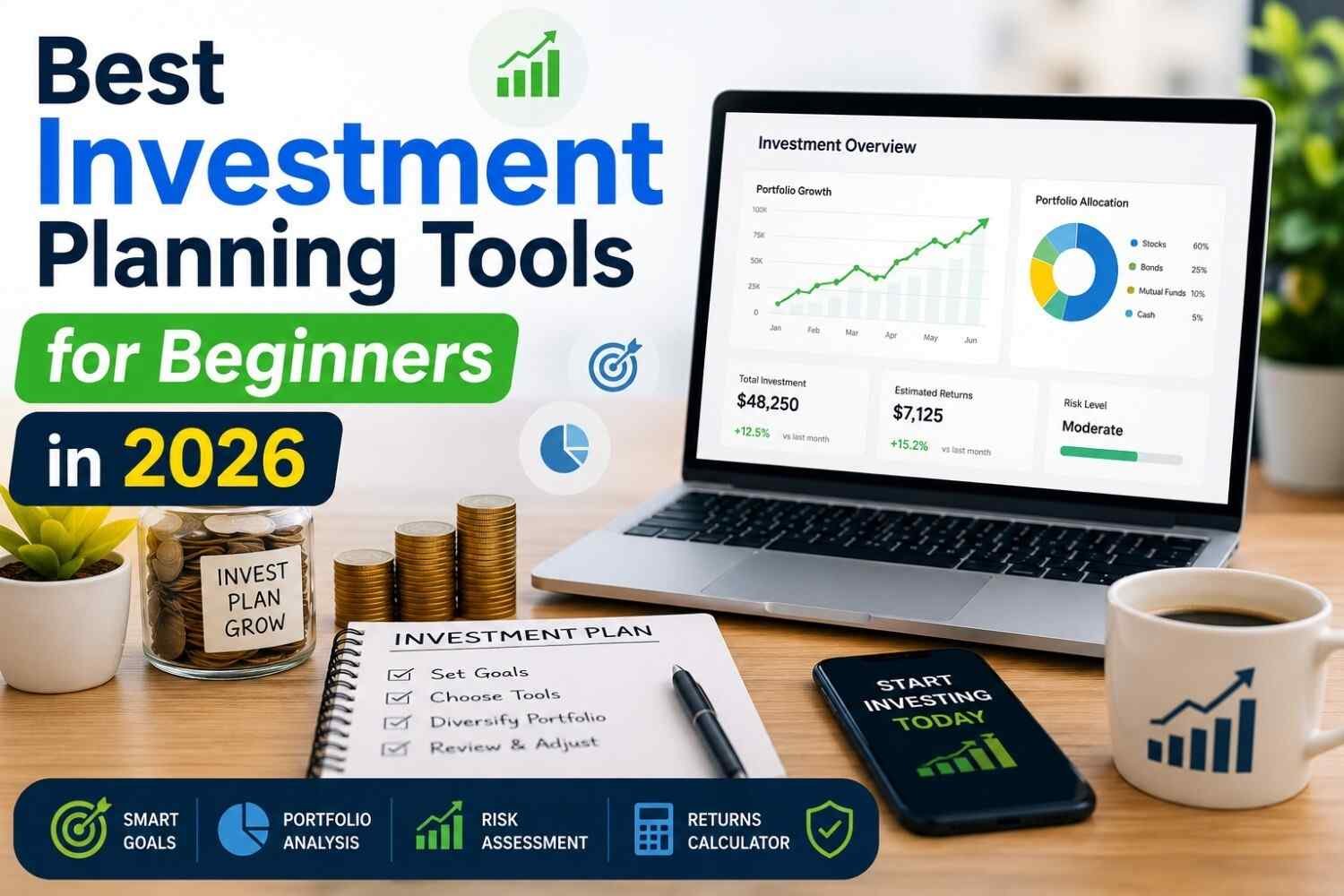
Investing can seem complicated when you are just getting started. Between choosing investments, understanding potential returns, planning for retirement, and tracking a portfolio, there are many financial decisions to consider.
Fortunately, investment planning tools can make the process easier. From an investment calculator that estimates potential growth to portfolio tracking and retirement planning tools, these resources can help you organize your financial goals and make more informed decisions.
This guide explores some of the most useful investment planning tools beginners can consider in 2026.
What Are Investment Planning Tools?
Investment planning tools are online calculators, financial planning platforms, and portfolio management resources designed to help people understand and organize their investments.
Depending on the tool, you may be able to:
- Estimate potential investment returns
- Calculate compound growth
- Compare different investment scenarios
- Track an investment portfolio
- Plan retirement savings
- Estimate future financial needs
- Analyze risk and asset allocation
- Create long-term financial goals
For beginners, these tools can provide a clearer picture of how different financial decisions could affect their future.
1. Investment Return Calculator
An investment return calculator is one of the simplest tools for someone starting their investment journey. You typically enter information such as initial investment, monthly or annual contributions, estimated annual return, and investment period.
The calculator then estimates how the investment could potentially grow over time. For example, someone saving a fixed amount every month can use an investment calculator to understand how regular contributions and compound growth may affect their long-term portfolio.
Keep in mind that calculator results are estimates rather than guarantees. Actual investment returns can vary significantly.
2. Compound Interest Calculator
A compound interest calculator can be particularly useful for understanding long-term investing. Compound growth occurs when investment returns are reinvested and subsequently generate additional returns.
The longer money remains invested, the more significant the effect of compounding can become. A compound interest calculator allows investors to experiment with different starting balances, contribution amounts, interest or return assumptions, investment periods, and compounding frequencies.
This can help beginners understand why consistent long-term investing is often an important part of financial planning.
3. Portfolio Management Tools
Once you have multiple investments, keeping track of everything can become difficult. Portfolio management tools can help investors monitor assets in one place.
Depending on the platform, features may include portfolio performance tracking, asset allocation, investment diversification, gain and loss tracking, portfolio value monitoring, and investment history.
A portfolio management tool can be particularly helpful when someone owns different types of investments or accounts.
4. Retirement Planning Calculator
Investment planning and retirement planning are closely connected. A retirement planning calculator can help estimate how much money may be needed to support future financial goals.
Common inputs include current age, planned retirement age, current savings, monthly contributions, estimated investment return, expected retirement expenses, and inflation assumptions.
The results can help users explore different savings scenarios. For example, increasing monthly contributions or changing the expected retirement age can demonstrate how different assumptions may affect a long-term retirement plan.
5. Asset Allocation Tools
One of the most important concepts for new investors is asset allocation. Asset allocation refers to how investments are distributed across different asset categories.
Depending on an individual’s goals and risk tolerance, a portfolio might contain different combinations of stocks, bonds, cash, real estate, and other investments.
Asset allocation tools can help users visualize how their portfolio is distributed and identify areas that may need further consideration. However, a tool should not be treated as personalized financial advice.
6. Financial Planning Tools
A broader financial planning tool can combine multiple aspects of personal finance. Instead of looking only at investment returns, financial planning platforms may consider income, expenses, savings, investments, debt, retirement goals, emergency savings, and long-term financial objectives.
This makes financial planning tools useful for people who want to look at their entire financial situation rather than a single investment.
7. Investment Goal Calculators
Investing without a specific goal can make it difficult to determine how much to save. An investment goal calculator can help connect a financial objective with a savings strategy.
For example, someone might have goals such as building retirement savings, saving for a home, creating an education fund, building long-term wealth, or reaching a specific savings target.
Users can then experiment with different contribution amounts and time periods to understand what may be required to reach a particular target.
8. Risk Assessment Tools
Every investment involves some degree of risk. Investment risk assessment tools can help beginners think about how comfortable they are with market fluctuations and potential losses.
Questions may cover investment timeframe, financial goals, experience, reaction to market declines, income stability, and need for liquidity.
Risk assessment is important because an investment strategy that looks attractive on paper may not be suitable for someone who cannot tolerate significant volatility.
How to Choose the Right Investment Tool
You don’t necessarily need dozens of financial tools. Start with the tools that match your immediate financial goals.
If You’re Just Starting
Use an investment calculator and compound interest calculator to understand how investing and regular contributions could affect long-term growth.
If You Already Invest
A portfolio management tool can help you monitor your investments and asset allocation.
If Retirement Is Your Priority
Consider a retirement planning calculator to explore different savings and retirement scenarios.
If You’re Building a Complete Financial Plan
A broader financial planning tool may be more useful because it can incorporate savings, expenses, investments, debt, and long-term goals.
What Beginners Should Consider Before Investing
Investment calculators can provide useful estimates, but they cannot predict the future. Before making an investment decision, consider factors such as:
- Investment timeframe – Longer time horizons may allow investors to handle more short-term market fluctuations.
- Risk tolerance – Different investments have different levels of risk. Understand how much volatility you can realistically tolerate.
- Diversification – Depending on your circumstances, spreading investments across different assets may reduce concentration risk.
- Fees – Investment fees and account costs can affect long-term returns.
- Emergency savings – Investing money that may be needed for near-term expenses can create unnecessary financial pressure.
- Taxes – Tax treatment varies depending on your country, investment type, and account structure.
Investment Planning Tools vs. Financial Advisors
Online investment tools can be convenient because they are usually quick and easy to use. However, they have limitations.
A calculator can estimate potential investment growth based on the assumptions you provide, but it cannot fully understand your personal financial situation.
A qualified financial professional may provide more personalized guidance regarding areas such as retirement planning, tax planning, investment strategy, estate planning, risk management, and portfolio construction.
For complex financial situations, professional advice may be worth considering.
Final Thoughts
The right investment planning tools can make financial planning easier for beginners. An investment calculator can help estimate potential returns, while compound interest calculators demonstrate the potential impact of long-term growth.
As your financial situation becomes more complex, portfolio management tools, retirement calculators, asset allocation tools, and financial planning platforms can help you organize different aspects of your financial strategy.
The most important thing is to treat these tools as educational resources rather than guarantees of future performance. Investment returns are uncertain, and assumptions used by calculators may not reflect actual market results.
Start with a few simple tools, define clear financial goals, understand the risks involved, and review your strategy regularly.